
Testing The Boundaries
Our corn variety test plot has become ground zero in the quest to reduce input cost without sacrificing profit. While comparing yield and moisture levels are the main focus, we are studying other facets of production also. Specifically, how much can we lower seeding rate and maintain yield, how late can we plant full season varieties, and can conventional varieties be profitable in a corn/corn environment?
Seeding rate recommendations from genetics companies and universities for our climate and soils run in the low 30K seeds/acre. I'm not suggesting an unethical collaboration between these entities, but our experience is final stands significantly lower than this are capable of producing top yields. Can both be right? Controlled environment research plots may respond to higher populations. Out here in the wild, uniform final stands in the upper 20K's/acre do not appear to be yield limiting. This will be the second year we used a 28,500 seeding rate. If we can achieve yields over 250 bu/acre, a final stand in this realm is probably adequate for most farms.
Twenty years ago, it was preached emphatically to plant corn early. This would allow for capturing the most heat units and growing the longest season varieties possible which theoretically have the highest yield potential. This statement is generally accurate, but when is early "too early?" Since we started analyzing yield relative to planting date, the earliest planting window has never produced the highest yields. The most frequent cause being extended cold, wet weather episodes resulting in uneven emergence and seedling mortality. Most years have a goldilocks window sometime after the first planting opportunity that produces the best crops.
So now we have conflicting indications. Plant late season varieties as early as possible to capture max heat units or wait as long as possible for the soil to warm up to get quick, uniform emergence. Lately, the plot is our last field planted. Every variety regardless of maturity is included. By pushing the plot planting date to the end of our planting window, we get a better idea of how late we can plant full season varieties, expect them to reach maturity, and out yield shorter season numbers.
Finally there is the conventional vs traited corn debate. Genetics companies would have you believe you need to buy the traited seed with herbicide and insect resistance to be profitable. Not coincidentally, they have calculated the value of this convenient, uncomplicated, one size fits all remedy. We see it differently. We have been growing conventional corn in a corn on corn environment for twenty years. It is not convenient. it is not uncomplicated. It requires a specific plan for each field. But we can do it profitably. This knowledge is useful when we negotiate with our seed suppliers.
Two weeks ago Monday we planted the plot. Twenty varieties in 24 row strips X 1/2 mile/strip. The plot covers most of a quarter section. Friend and seed provider Tom Miller came up from SE Iowa to assist. 1.5" precip fell on this location five days later. Excellent start to what we hope is a yield friendly growing season. We will keep you updated.
Jim
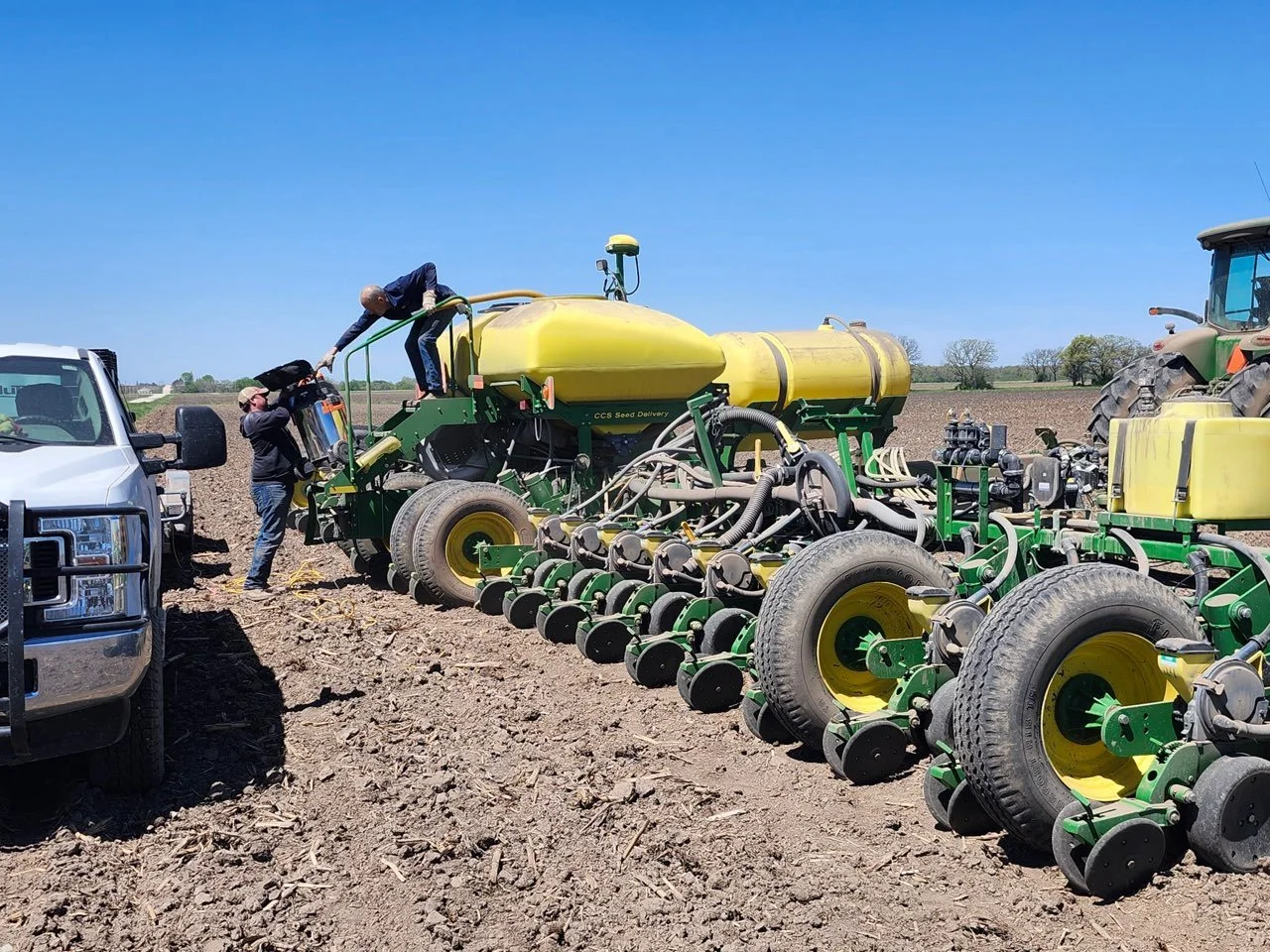
Alex hands Jim vac to clean out hopper between varieties.
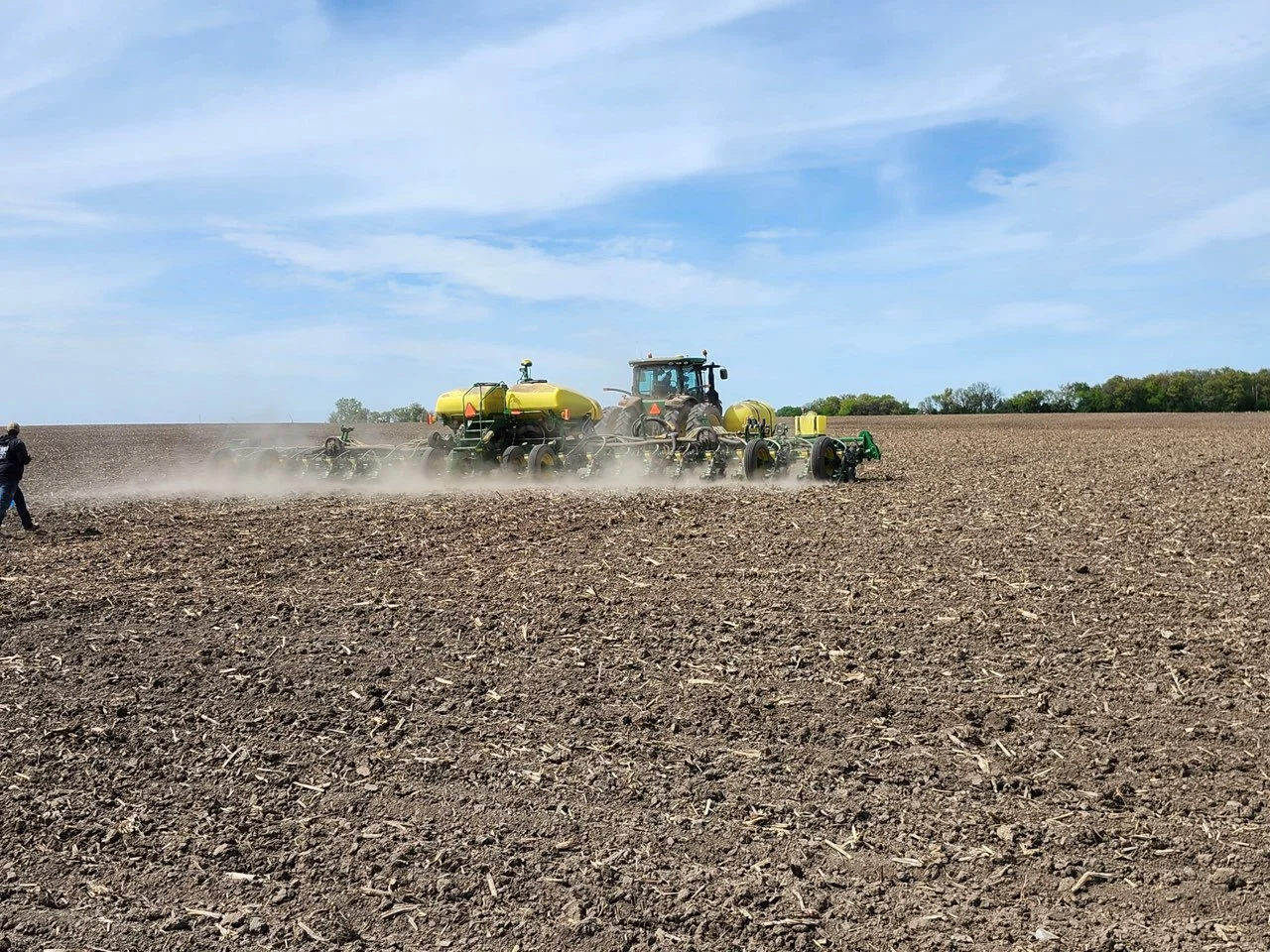
Jim starts another test round. Right 1/2 of planter is test. Left is check.
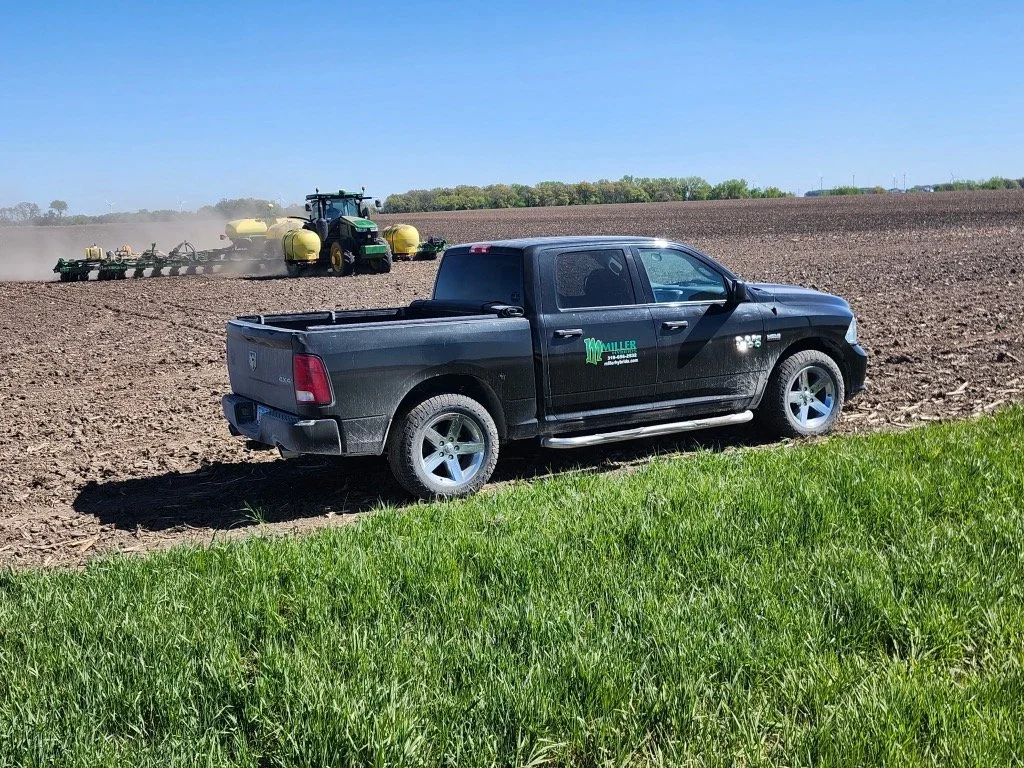
Tom represents Miller Hybrids, an independent seed breeder based in Kalona, IA. No relation.